Posted November 20th, 2013 by Dan
|
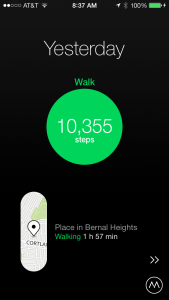 We’re pleased to announce that we have integrated with the smartphone app called Moves. This app can be downloaded for both iOS and Android phones. Once downloaded and configured, it works like a pedometer to collect your daily step count as you carry your phone with you across the day. Recently, Moves upgraded their product to Moves 2.0, which provides a very nice experience, consistent with the iOS7 flat design style. Here is a screenshot of my steps from yesterday:
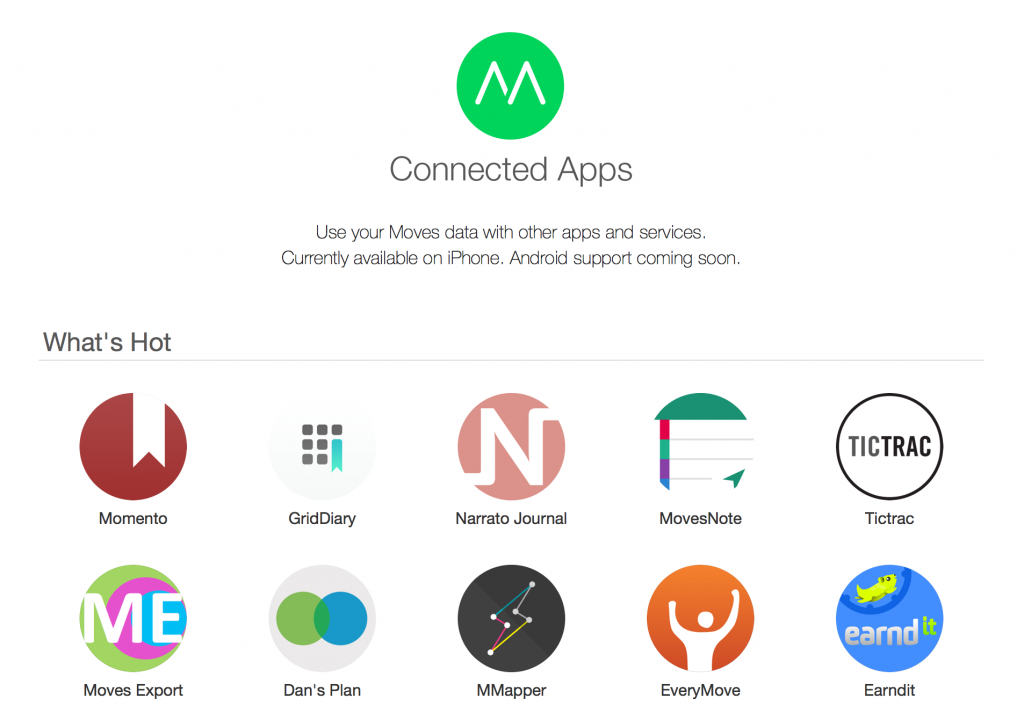
Check out the featured Dan’s Plan page on the Moves Connected Apps site.
Integration with Dan’s Plan
Integrating Moves with Dan’s Plan means that the app will automatically track your daily steps and send that information to Dan’s Plan to update your Health Zone Score, which helps you be mindful of daily lifestyle, including low-intensity physical activity (captured by daily step count).
Getting Started
1. Download Moves to your phone.
2. Create a Moves account.
3. Go to your Dan’s Plan Dashboard.
4. Click “Synch Apps & Devices” and follow the set up wizard.
Total time: 2-3 min.
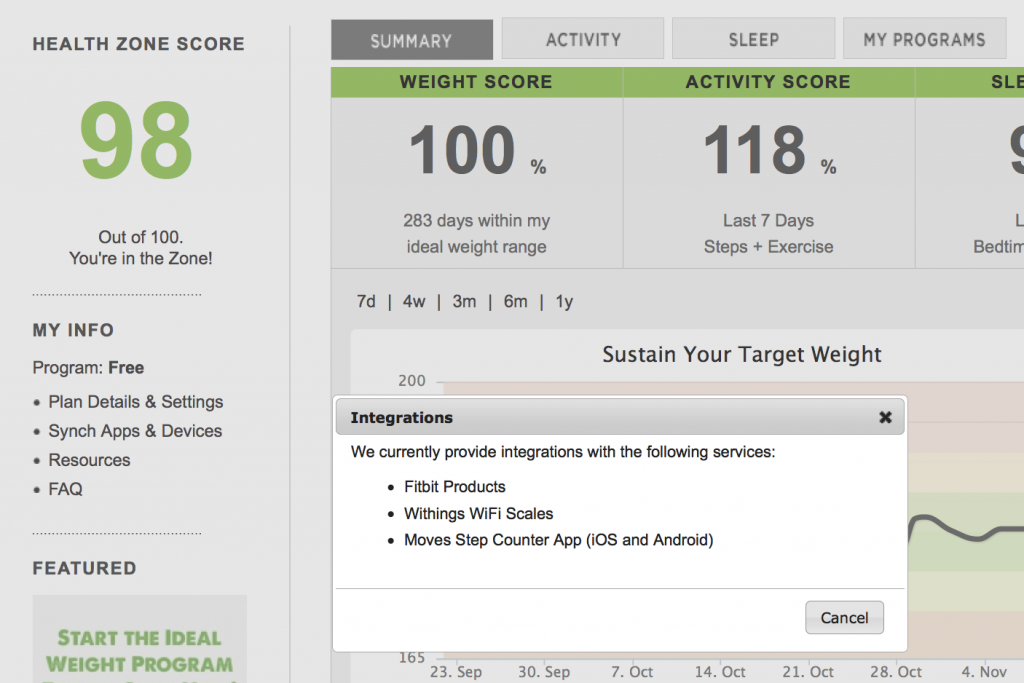
Moves automatically tracks daily steps, then updates your step total and Health Zone Score on Dan’s Plan.
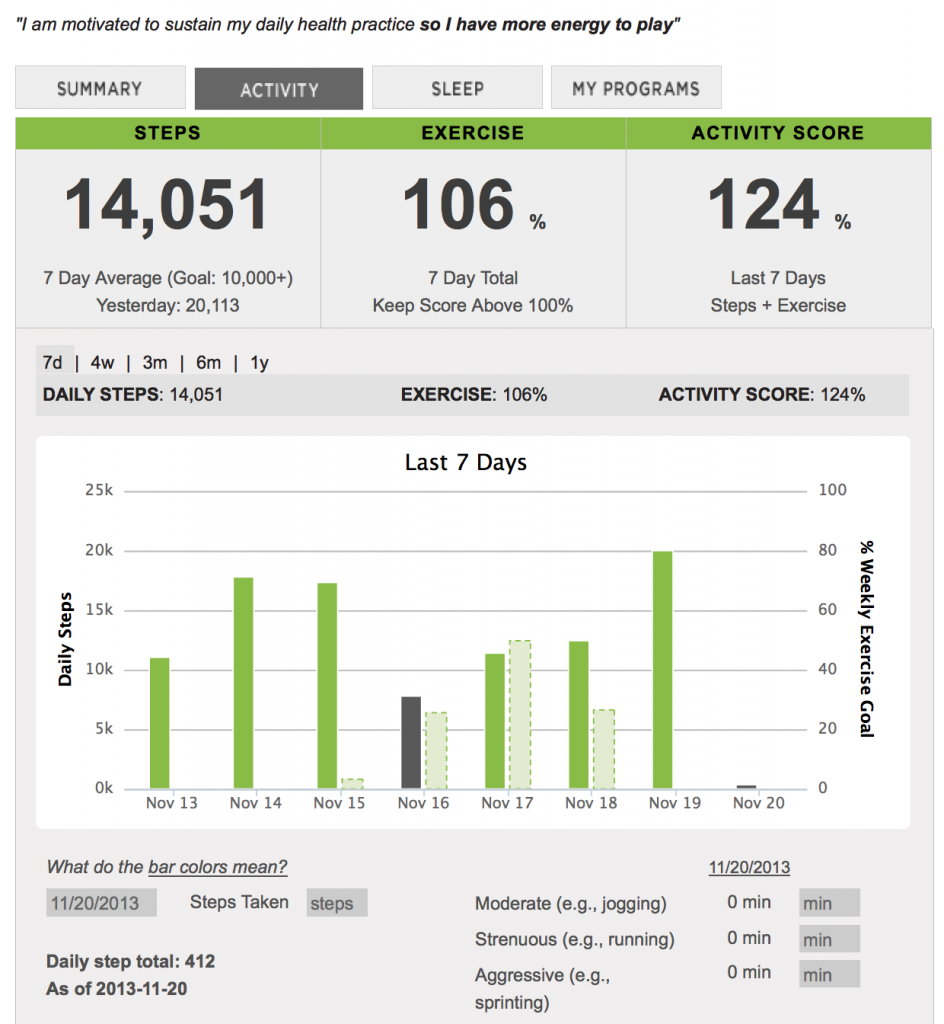
Should I also integrate the Moves App even if I have a Fitbit integrated with Dan’s Plan already?
Yes. Once you do this, you will have a backup step counter working at all times, which means that your Dan’s Plan Step Tracker score will always be up to date, even if you leave your Fitbit at home, or if it runs out of battery.
Posted October 28th, 2013 by Dan
|
Sleep is important for health and weight. Sleep, like many other processes, is governed by the brain. In particular, the brain contains a “clock” that resides primarily in the suprachiasmatic nucleus (SCN). This clock has a cycle of approximately 24 hours, and regulates other parts of the brain that effect the onset and termination of sleep. The SCN is a tiny nucleus that’s positioned just above the optic chiasm, the place where the two optic nerves cross. These are the nerves that transmit information from the retinas to the brain. Not surprisingly, the SCN receives direct input from the retinas. Also not surprisingly for a species that lives by the day-night cycle, the human SCN clock is set primarily by light.
This poses a problem for modern humans, who expose ourselves to artificial light long after the sun has gone down. This light essentially tells our SCN clock it’s still daytime, making it more difficult to sleep at night and more difficult to get up in the morning. This is clearly evident because nighttime light suppresses the secretion of the sleep hormone melatonin by the pineal gland, which is under the control of the SCN (1, 2).
Interestingly, the photoreceptors in the retina that project to the SCN are most sensitive to blue light (1, 2). This may be because midday sunlight is more blue than light around sunrise and sunset, and is therefore a better cue for setting the clock. In any case, this peculiarity of human physiology gives us the opportunity to minimize the negative impacts of evening light by shifting it to a less blue spectrum.
Computer monitors are one of the most problematic sources of light because they’re bright and often contain a lot of blue light. One solution is to wear blue-blocking glasses such as the inexpensive
Uvex SCT Orange model. I’ve been using these for about a year and they work well. I notice myself feeling more tired almost immediately after putting them on. Controlled trials have confirmed that blue-blocking glasses completely restore melatonin secretion (
3,
4), presumably eliminating the effects of artificial light on the SCN clock.
Another great tool is
F.lux, a free computer program that automatically changes your monitor’s color spectrum based on the time of day. I’ve been using this for about two years, and previously felt that it wasn’t able to remove enough blue light to be very useful. I recently realized that they upgraded it in a way that makes it much better. If you pull up the program, click on the three horizontal lines to the right of the settings menu, and scroll over the “lighting at night” menu, you will see seven options for color temperature ranging from “sunlight” to “ember”. I’ve found that when I dim my monitor, the ember setting is equivalent to wearing blue-blocking shades while I use my computer. In fact, I’m feeling sleepy right now as I write this.
In the
Ideal Weight Program, we focus on improving sleep quantity and quality in part by using skillful light exposure to naturally guide the SCN clock to a healthy day-night cycle. F.lux is a useful tool that we highly recommend.

Written by Stephan J. Guyenet, Ph.D., co-developer of the Ideal Weight Program
Posted October 10th, 2013 by Dan
|
A few weeks ago, I had the opportunity to join Mans Denton on his radio podcast, The Hacked Mind. I particularly enjoyed this show because Mans gave me the opportunity to discuss my own research in detail. We also spent time talking about cognition, memory, and hormones that regulate the body fat level. Below, you can find a timestamped list of topics covered.
Listen here:
Dan Pardi talking cognition, sleep, wellness and weight control on The Hacked Mind with Mans Denton by Dansplan on Mixcloud
Discussion Topics
[02:32] Hormones in narcolepsy patients – missing brain protein
[04:35] Reaction time, mood, impulsivity – how sleep relates to eating behavior
[05:45] Dan’s new study – Slower reaction time after sleep deprivation
[07:11] Effort discounting – less likely to work for something you would otherwise work for
[09:55] How healthfully did subjects eat? Based on the users’ belief of health (health score)
[14:07] General reaction time problems from research; not linear decline in reaction time. Possible to focus, but not sustained periods
[16:59] Information entering the brain as a diffusion process; info moves slower throughout the brain and it is harder to learn new info
[17:45] Brian Wansink – “Mindless Eating”, over 200 food decisions made per day
[19:58] How memories are formed – storage in neural networks, pruning memories no longer needed (forgetting is good!)
[22:00] Encoding, consolidation, retrieval – sleep impacts all aspects of memory
[23:28] People who are obese have poor recall of foods eaten in the day; is obesity a memory problem?
[28:44] Impaired glucose regulation; sleep loss leads to glucose of pre-diabetic
[29:25] Leptin + ghrelin – regulating fat loss/brain signalling
[32:29] Aspects of modern food environment that shut down signals and make us consume more than usual
[33:09] Better at fat gain than fat loss
[33:32] Altered 24 hour profile for leptin and ghrelin; sleep deprivation = lower leptin, higher ghrelin, which both signal to burn less and consume more
[37:42] Modern lifestyle discordance with what the body genetically wants
[39:06] Dan’s Plan – tools for healthier living/tracking
Of course, if you have questions feel free to ask me anything related to this discussion in the comments below.
Thanks for listening!
Dan

 We’re pleased to announce that we have integrated with the smartphone app called Moves. This app can be downloaded for both iOS and Android phones. Once downloaded and configured, it works like a pedometer to collect your daily step count as you carry your phone with you across the day. Recently, Moves upgraded their product to Moves 2.0, which provides a very nice experience, consistent with the iOS7 flat design style. Here is a screenshot of my steps from yesterday:


