
Sauerkraut
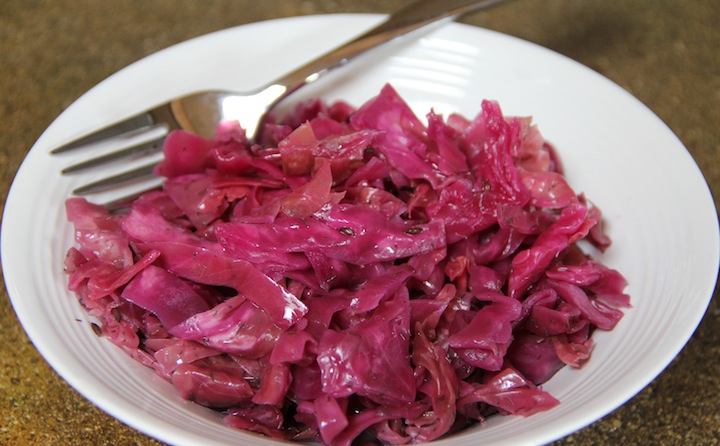
This recipe is from Wild Fermentation, a great resource for fermentation instructions and benefits. It’s a fun project and provides a healthful veggie side that stays crisp for many weeks. In the process of fermentation, salt pulls water out of the cabbage (through osmosis), and thus creates the brine in which the cabbage can ferment and sour without rotting. The salt also keeps the cabbage crunchy by inhibiting organisms and enzymes that soften it. You can experiment endlessly with this recipe by adding other vegetables, such as carrots, onions, garlic, Brussels sprouts, turnips, beets, etc. You can also add fruits like apples, or herbs like dill.
Makes 1 Gallon
Ingredients
- 5 pounds cabbage (I use a combination of red and green)
- ~4 tablespoons sea salt
- ~3 tablespoons caraway seeds
Preparation
- Cut cabbage into quarters, then 1/4 inch slices from one point to the other. (Combining red and green cabbage will result in bright pink kraut)
- Place cabbage in a large bowl as you slice, sprinkling salt over it as you go.
- You’ll also want to sprinkle some of the caraway seeds in occasionally.
- Give the cabbage a few final mixes in the bowl.
- Pack tightly into a ceramic crock, bit by bit, pushing it down with your fists or a jar as you go along.
- Cover kraut with a plate that fits inside.
- Place a clean weight, such as a large glass jar filled with water, on top of the plate. (The weight will force water out of the cabbage and keep it submerged under the brine)
- Cover the whole thing with a clean cloth to keep dust and flies out.
- Press down on the weight to force more water out of the cabbage every few hours, until the brine rises above the plate. (This can take up to about 24 hours)
- If the brine does not rise above the plate level by the next day, add enough salt water to bring the brine level above the plate. (Add about a teaspoon of salt to a cup of water and stir until it’s completely dissolved)
- Leave the crock in an unobtrusive corner of the kitchento ferment.
- Check the kraut every day or two. (The volume reduces as the fermentation proceeds)
- If mold appears on the surface, simply skim off what you can and don’t worry about the rest as it is just a result of the liquid’s contact with the air)
- Rinse off the plate and the weight.
- After at least a week has gone by, taste the kraut. (Generally it starts to be tangy after a week, then the taste gets stronger as time passes. In cool temperatures, kraut can keep improving for months. In a warmer places, its life cycle is more rapid)

